
PET SAFETY & MEDICINES
What to do with unused or expired pet medicine

Verified
Return unused or expired pet medicine to the supplier or vet practice it came from. Bin used spot-on pipettes and empty bottles without rinsing them, and never pour medicine down a sink, toilet or drain.
If you bought pet medicine from Ashcroft 4 Pets, contact our pharmacy team before you bin it or post it back. Tell us the product name and whether it’s been opened, and we’ll give you the right disposal route for that item.
Jump to a section
- Pet medicine disposal at a glance
- How do you check if pet medicine has expired?
- How do you dispose of each type of pet medicine?
- How do you dispose of pet insulin needles and sharps?
- How do you return your pet’s controlled drugs?
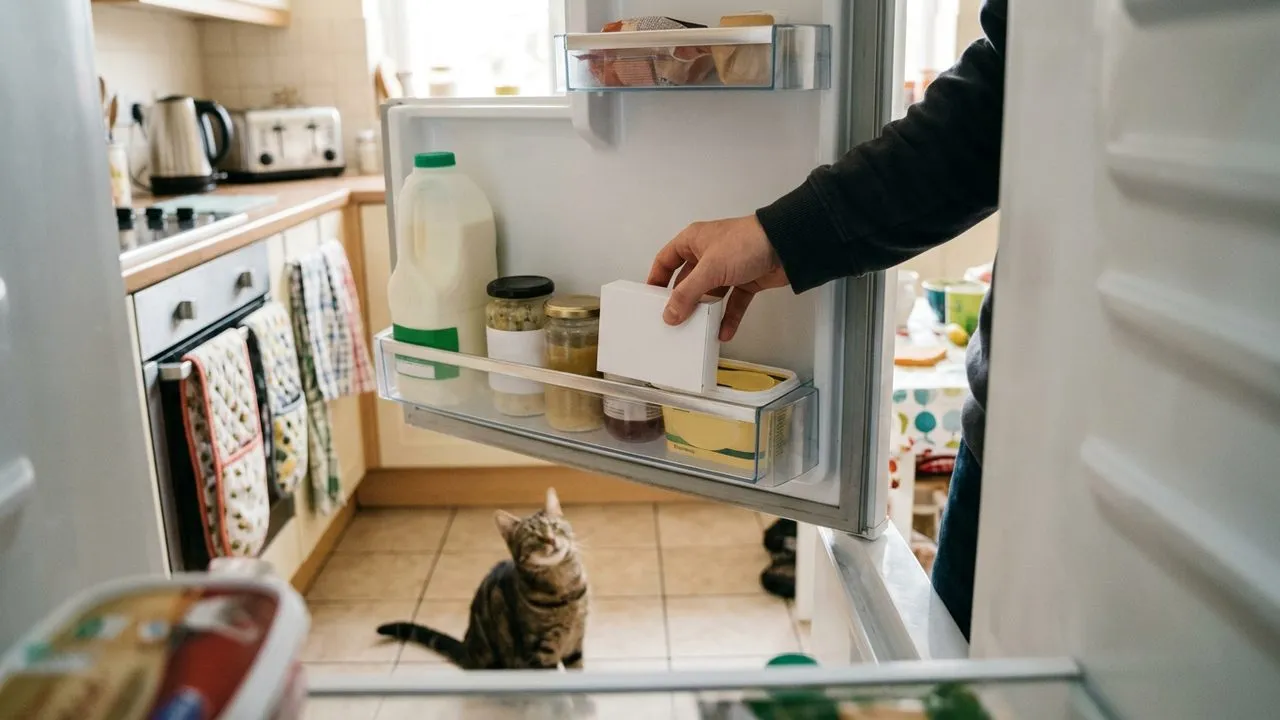
- What do you do with unwanted pet fridge medicines?
- What do you do with your pet’s medicine after they die?
- Is dog flea treatment dangerous to cats or rabbits?
- What should you never do with leftover pet medicine?
- How do flea spot-ons get into rivers, and how do you stop it?
- When should you speak to your vet?
- What if nobody will take your pet medicine back?
- Can you return pet medicine or get a refund in the UK?
- How should you store leftover pet medicine?
- How do you avoid leftover pet medicine?
- When is the Animal Medicines Amnesty?
- Frequently asked questions
Pet medicine disposal at a glance
| Item | What to do |
| Unused or expired medicine | Ask your supplier or vet about taking it back |
| Used pipettes and empty bottles | Household bin, unrinsed, not recycled |
| Needles | Sharps bin from your vet, never the household bin |
| Controlled drugs | Back to your vet, never the bin |
| Any medicine | Never down a sink, toilet or drain |
Bought pet medicine from Ashcroft 4 Pets?
If you bought pet medicine from Ashcroft 4 Pets, contact our pharmacy team before you bin it or post it back. Tell us the product name and whether it’s been opened, and we’ll give you the right disposal route for that item.
The Veterinary Medicines Directorate (VMD) advises owners to ask their medicine supplier about returning unused or expired medicine. Bought it from your vet practice? Phone them before you take it in.
How do you check if pet medicine has expired?
Pet medicine has expired once it passes the date printed after “EXP” on the pack. Some medicines also have a shorter “use within” period once opened. Don’t use medicine past either date.
The dates matter because they mark how long the medicine stays stable and safe. Out-of-date medicine can’t legally be supplied, even free of charge.
- Find the expiry date after “EXP” on the box and on the pipette, blister strip or bottle. On many products it means the last day of the month shown, and the leaflet will say.
- Check for a “use within” period once opened. For injectable medicines this is usually 28 days after opening, but it can be shorter or longer.
- Store each product exactly as its label says, in its original pack. Fridge medicines have their own rules: cold-chain pet medicines explained.
Lost the leaflet? Every authorised product’s instructions are on the VMD Product Information Database.
How do you dispose of each type of pet medicine?
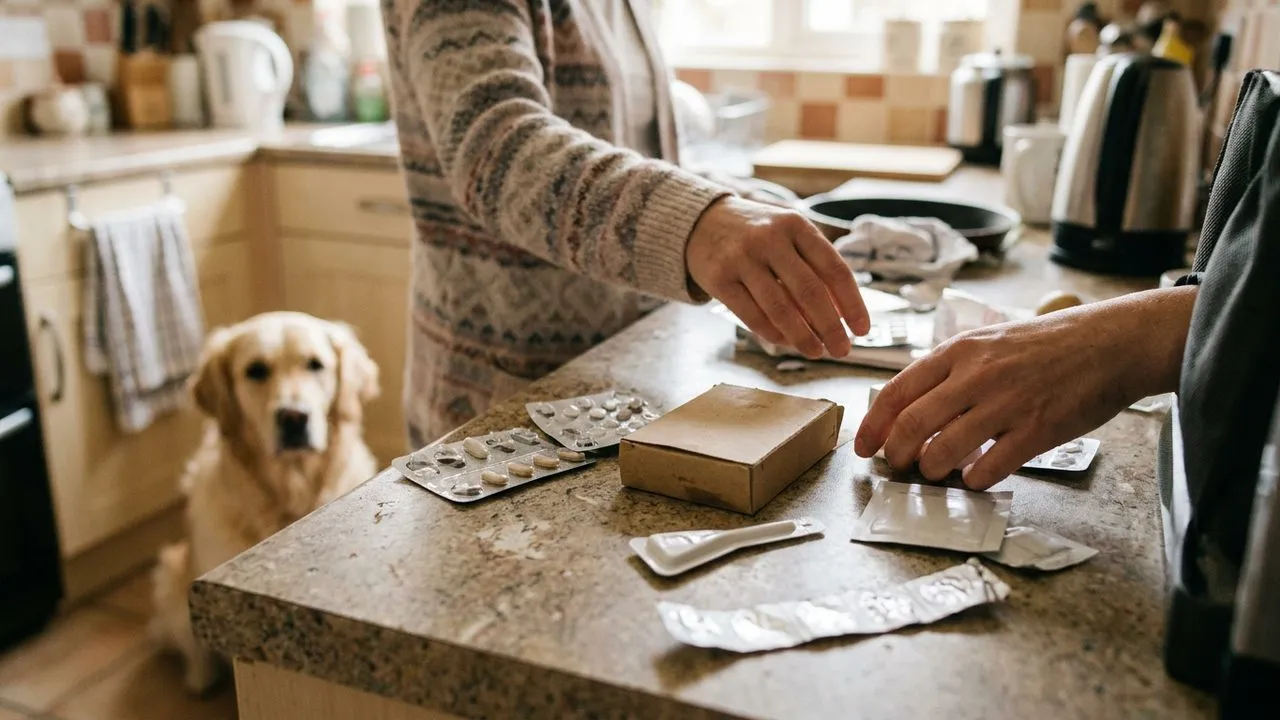
Unused or part-used pet medicine goes back to your supplier or vet practice. Packaging that touched the medicine, such as used spot-on pipettes and empty bottles, goes in the household bin without rinsing. Card boxes and leaflets can be recycled, and needles go in a sharps bin.
| Item | What to do | Why |
| Unused or expired tablets and chews | Return: ask your supplier or vet | Vet practices send returned medicine for licensed disposal. Leftover wormers? Check how often your dog needs worming before ordering again |
| Part-used bottles of liquid | Return: ask your supplier or vet | It still counts as unused medicine |
| Unopened spot-on pipettes | Return: ask your supplier or vet | An unused pipette still holds the full dose |
| Used spot-on pipettes | Household bin. Don’t rinse or recycle | Government spot-on guidance |
| Empty bottles, tubes and oral syringes | Household bin, cap on, unrinsed | Rinsing washes leftover medicine into drains. Rinsing a reusable syringe during a course is fine |
| Empty blister packs | Not kerbside recycling. Use a pharmacy recycling point if it takes them, otherwise the household bin | Mixed plastic and foil can’t go in household recycling |
| Blister packs with tablets still in | Return: ask your supplier or vet | It’s unused medicine |
| Needles | Sharps bin. See the section below | Never loose in any bin |
| Card box and paper leaflet | Recycling bin | Remove your name and address first |
| Fur brushed from a treated pet | Household bin, not left out for nesting birds | VMD advice |
| Your dog’s poo | Bag it and bin it, as on any walk |
How do you dispose of pet insulin needles and sharps?
Used pet insulin needles go straight into a sharps bin, never loose in the household bin. Your vet practice can supply a sharps bin when they show you how to inject your pet.
Don’t recap, bend or break a used needle. Drop it in whole.
When the bin is full, seal it and take it back to your vet. Ask about any disposal fee when you first get the bin. Council sharps collections may not take pet sharps: Solihull, for example, refers owners back to their vet.
How do you return your pet’s controlled drugs?
Controlled drugs are medicines with stricter legal rules on storage and destruction, including some pain relief and seizure medicines for pets. Your vet or the dispensing label will tell you if your pet’s medicine is one.
Your pet’s controlled drugs always go back to your vet practice, never in the bin. Tell reception what you’re handing in. Vet practices destroy returned controlled drugs rather than reuse them.
What do you do with unwanted pet fridge medicines?
Unwanted fridge medicine goes back to your supplier or vet, like any other medicine. Keep it in the fridge until you hand it over. The label gives the storage temperature and how long it lasts once opened.
How to store and transport these medicines: cold-chain pet medicines explained.
What do you do with your pet’s medicine after they die?
After your pet dies, there’s no rush to deal with their medicine. When you’re ready, gather everything, including spot-ons, fridge medicines and the sharps bin, and take it to your vet practice in one go.
Bought from Ashcroft 4 Pets? The same route applies: ask our pharmacy team first.
Is dog flea treatment dangerous to cats or rabbits?
Yes. Dog spot-ons containing permethrin are safe on dogs but extremely poisonous to cats. Flea products containing fipronil can cause severe reactions and even death in rabbits. Only use a product licensed for that species.
Keep cats away from a freshly treated dog, and stop them grooming it or sharing its bed. Bin used dog pipettes where your cat can’t reach them.
Choosing for a mixed household: spot-on vs chewable treatments and choosing a flea treatment for your dog.
What should you never do with leftover pet medicine?
Never pour pet medicine down the drain, rinse empty packs, give leftovers to another pet, pass medicine on to someone else, or keep an old course for later.
- Don’t pour medicine down a sink, toilet or drain. Wastewater is one of the main ways pet medicines reach UK rivers.
- Don’t rinse empty pipettes, bottles or packs before binning them. Rinsing washes leftover medicine into the same drains.
- Don’t give leftovers to another pet. Medicine is supplied for one animal, after checking its species, weight, age and health.
- Don’t sell or give away prescription or pharmacy-category pet medicine. Only a vet, pharmacist or suitably qualified person (SQP) can legally supply it, even for free.
- Don’t keep an old course “just in case”. Handing back unused antibiotics helps slow antibiotic resistance.
How do flea spot-ons get into rivers, and how do you stop it?
Flea and tick spot-ons reach UK rivers through wastewater, such as when a treated pet is bathed, and when treated dogs swim. Environment Agency monitoring has found fipronil and imidacloprid in UK waterways at levels that could harm river insects such as mayflies, which fish and birds feed on.
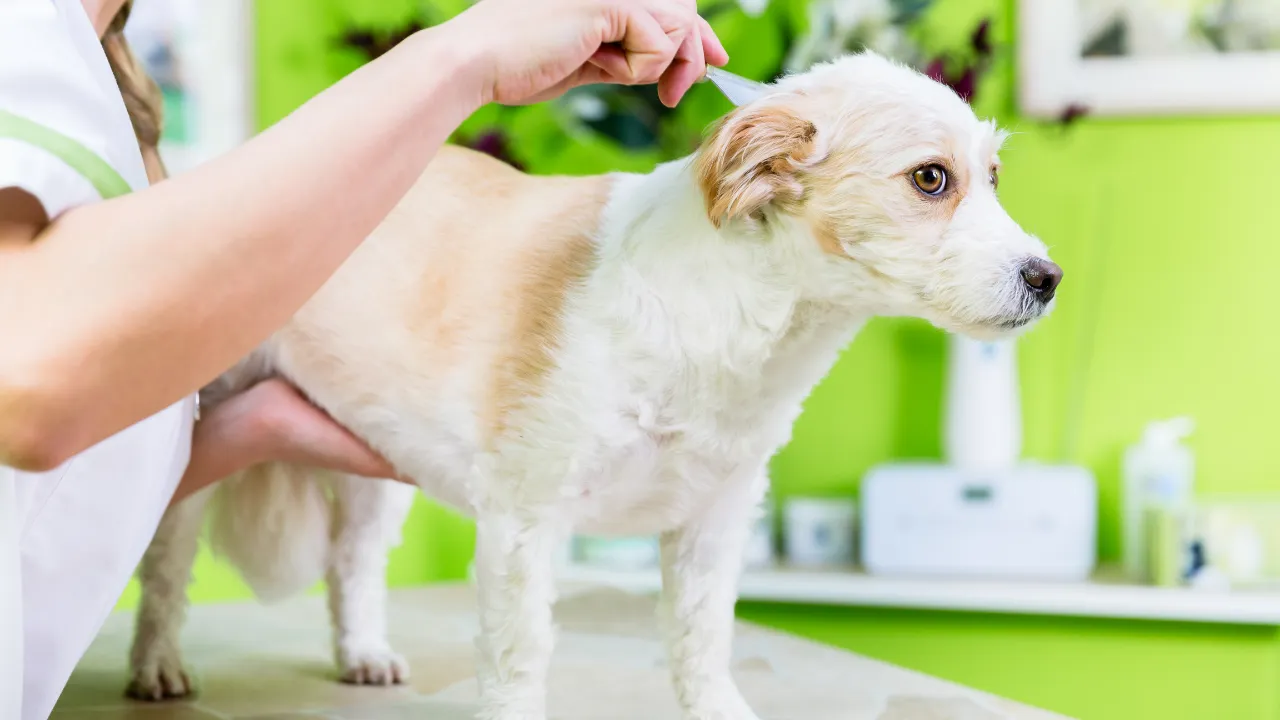
The government’s Be Spot-on Aware campaign sets out three steps: plan, apply, protect.
- Wash your pet in the days before treatment, not after, and apply it when you won’t be cuddling them, like bedtime.
- Part the fur until you see skin, and apply the spot-on to the skin, not the fur.
- Keep your dog out of water for at least 4 days, limit swims and baths in the weeks after, and bin the pipette and any brushed-out fur.
More on getting the timing right: when to apply flea treatment.
When should you speak to your vet?
Call your vet straight away if your pet has eaten medicine that wasn’t meant for it, or your cat has had contact with a dog spot-on. Call them too if your pet seems unwell after a new treatment.
Check with your vet before you:
- give leftover medicine from an earlier course
- treat a pet whose weight has changed since the last prescription
- switch to a different flea or worming product
What if nobody will take your pet medicine back?
If your supplier won’t take pet medicine back, try another vet practice first. If there’s still no return route, follow the disposal wording in the product leaflet. Keep the medicine out of reach of children and pets until then.
Can you return pet medicine or get a refund in the UK?
Usually not. Once licensed pet medicine has left the pharmacy or vet practice, nobody can check how it was stored. Vet practices must quarantine and dispose of medicine handed back to them, and no refund is given.
Handing medicine back still gets it to a licensed disposal service.
| What you have | UK online pet pharmacies | Vet practices | Ashcroft 4 Pets |
| Licensed medicine, opened or unopened, after dispatch | No return or refund | Take back for disposal, no refund | [A4P POLICY] |
| Unopened non-medicine items | Return within 14 days, unopened, original packaging | Ask the practice | [A4P POLICY] |
| Wrong, faulty or damaged on arrival | Report straight away | Speak to the practice | [A4P POLICY] |
How should you store leftover pet medicine?
Storing medicine as the label says keeps it usable for your pet until its expiry date. Returns still aren’t possible.
- Keep it in the original labelled pack, stored as the label says.
- Keep it out of reach of children and pets.
- Keep fridge medicines in the fridge: cold-chain pet medicines explained.
- Check with your vet before using leftovers later, as your pet’s needs may have changed.
- Hand leftover antibiotics back rather than keep them.
How do you avoid leftover pet medicine?
- Ask for the pack size that fits the course or the season. Prescribers and pharmacy suppliers must not supply more than the minimum needed for immediate treatment, where pack sizes allow.
- Weigh your pet before ordering a weight-banded product. The wrong band means an unused pack.
- Don’t stock up past the expiry date. Check how often treatment is due: how often your dog needs worming and when to apply flea treatment.
When is the Animal Medicines Amnesty?
The Animal Medicines Amnesty runs every November, led by RUMA CA&E. UK vet practices ask owners to hand back unused and out-of-date veterinary medicines for safe disposal. Use it as a reminder to check every expiry date at home.
Frequently asked questions
How do I dispose of pet medication in the UK?
Ask your supplier or vet about returning unused or expired pet medication. Put used pipettes and empty bottles in the household bin without rinsing them, and needles in a sharps bin. Never pour medicine down the sink, toilet or drain.
Can I take dog medication to a pharmacy?
High street pharmacies generally take back human medicines and point people with animal medicines to a vet. Ask the supplier you bought it from, or your vet practice.
Can I use out-of-date flea treatment?
No. Leaflets say not to use flea treatment after its expiry date, and it can’t legally be supplied once out of date.
Can I recycle flea treatment packaging?
The card box and paper leaflet, yes. Used pipettes and bottles go in the household bin. Blister packs can’t go in kerbside recycling, but some pharmacies run recycling points.
Does my vet charge to take medicine back?
It depends on the practice, particularly for sharps bins. Ask when you hand it in.