


How to Keep Your Dog Cool in a Heatwave

With temperatures already reaching record levels this summer and expected to remain high for the rest of the season, it's important we find ways to help keep our furry friends cool and comfortable.
Unlike ourselves, dogs aren't as efficient at keeping themselves cool through methods like sweating — so here are a list of suggestions, recommended by the British Veterinary Association (BVA), that can help our four-legged friends.
- Avoid walks during peak heat — stick to early morning or late evening.
- Use the five-second tarmac test before every walk to protect paws.
- Never leave dogs in hot cars, rooms or conservatories — give constant access to water, shade and ventilation.
- Learn the early signs of heat stroke and act fast: cool first, transport second.
Remember: "Cool first", transport second. Start cooling your dog before you set off for the vet, not instead of it.
Jump to a section
Keep walks to early morning or late evening
Peak temperatures of the day are often between 11am–3pm and should be avoided when planning walks. Instead, it is best to opt for early morning before temperatures begin to climb, or late evening as the temperature begins to drop. If the temperature remains too high, it may be best to skip walks completely.
Check the temperature of the tarmac
The five-second tarmac test will help protect our dog's paws from hot flooring which could lead to damage. This can be done by placing the palm of your hand on the pavement for five seconds — if it's too hot for your palm, then it will be too hot for your dog's paws, even for a short period.
Other ways to help them stay cool:
- Provide constant access to fresh water, shade and ventilation — this will ensure your pet stays well hydrated and avoids direct sunlight during the hottest times of the day.
- Never leave dogs in hot rooms, cars, caravans or conservatories — temperatures in these areas increase rapidly and turn dangerous quickly.
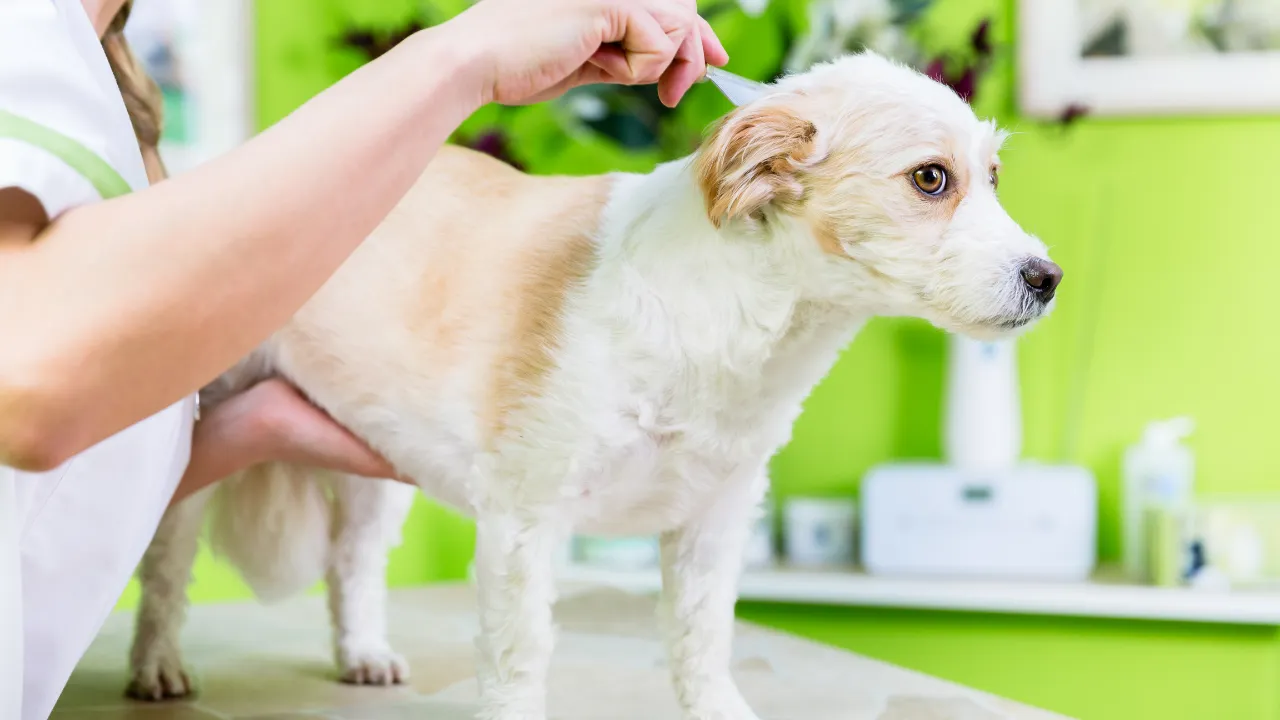
- Maintain regular grooming — a good coat doesn't mean a really short trim, as this can be harmful for certain breeds by removing the UV protection the fur provides. Instead, reduce bulk and prevent tangles with regular brushing, and keep the fur short around the belly and groin so the skin can have contact with cool floor tiles.
Recognising the signs of heatstroke
As well as helping to prevent your dog from overheating, it's equally important to recognise the signs of heatstroke early — and to know how they can progress if left untreated.
- Early signs — panting (progressing to distressed, noisy breathing), restlessness or agitation, constantly seeking shade or water, and drooling.
- Worsening signs — red gums or tongue, an increased heart rate, and vomiting or diarrhoea.
Advanced signs — seek veterinary advice immediately: lethargy, confusion, weakness or collapse, and seizures. If you notice any of these, seek veterinary advice immediately — don't wait to see if they improve.
What to do if your dog has heatstroke
If you begin to notice any of these signs, it's important to take action. Move your dog to a cool, ventilated area and offer them small sips of water. In young, healthy dogs, it can be beneficial for them to be submerged in cool water. If not, pouring water that is cooler than your dog over them, in combination with a fan or breeze, can also help in older dogs or those with underlying health conditions.
Remember: "Cool first, transport second." Once you've started cooling your dog down, contact your vet as soon as possible for further advice.
Worried about your dog in this heatwave?
Our vet-led pharmacy team can talk you through cooling products and hot-weather care.
“The five-second tarmac test takes seconds to do but can prevent real harm — if it's too hot for your palm, it's too hot for your dog's paws.”