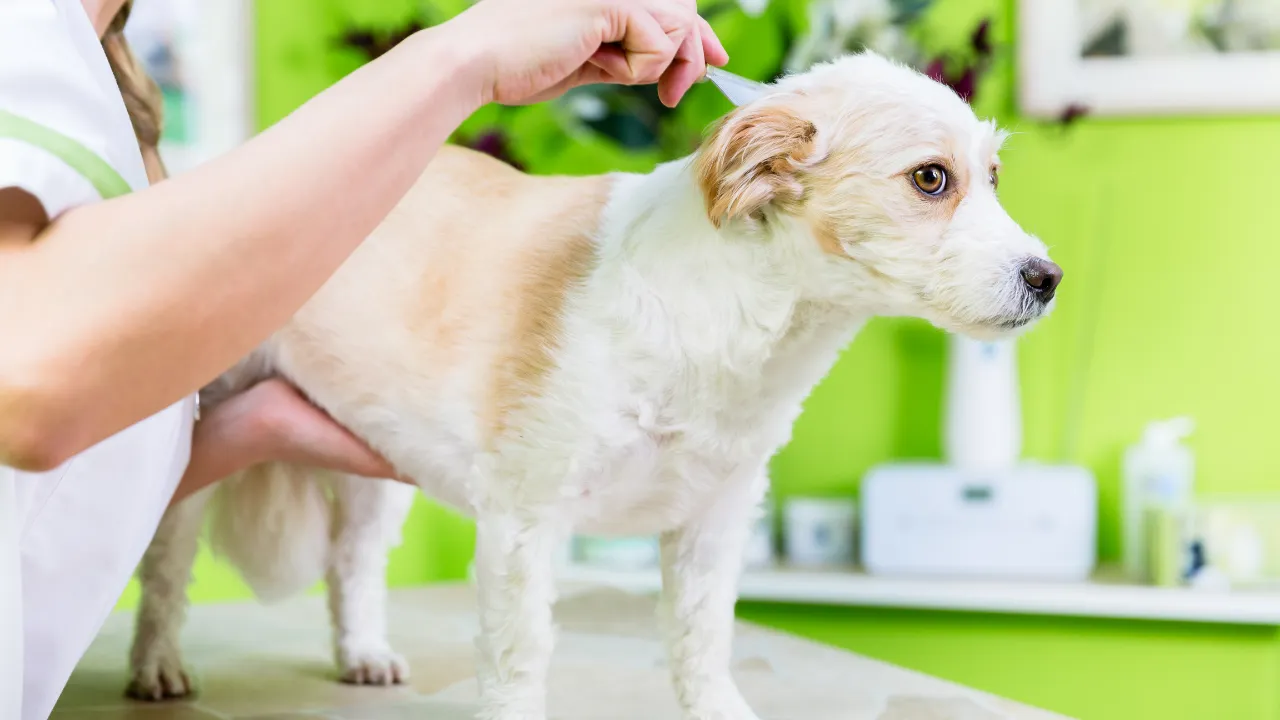
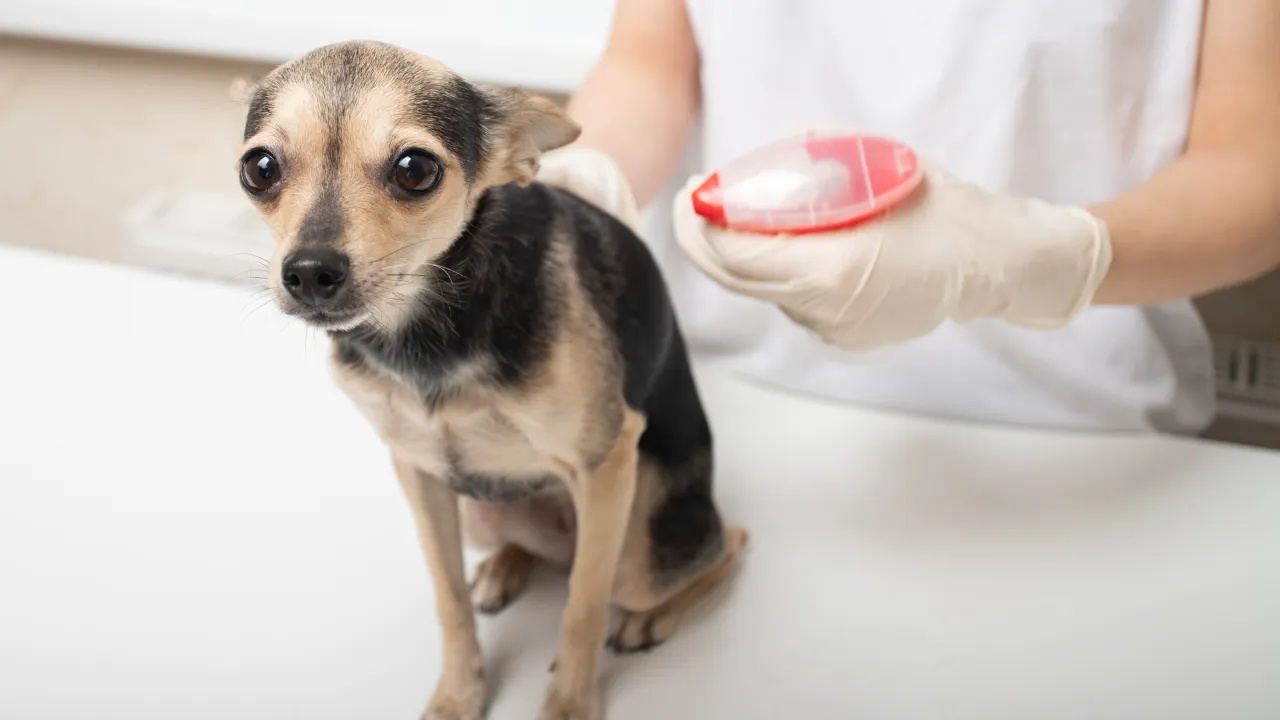



How to Check Your Dog for Ticks

Ticks are common parasites in the UK, especially in grassy, wooded, and rural areas. Studies have shown that around one in three dogs examined by vets have had ticks, with higher numbers in places such as Scotland, the South West, and East Anglia.
- Around 1 in 3 dogs examined by UK vets have had ticks, with higher rates in Scotland, the South West, and East Anglia.
- Ticks cannot jump or fly — they crawl onto dogs from grass, plants, or contact with wildlife.
- Grasp the tick as close to the skin as possible and pull slowly and steadily straight out — never twist or crush.
- Contact your vet if the head stays in the skin after removal, as retained parts can cause infection.
What ticks look like on dogs
Ticks feed on blood and can transmit diseases, so spotting and removing them early is essential for your dog's health. This guide explains what ticks look like, where they hide, how to check your dog properly, and how to remove them safely.
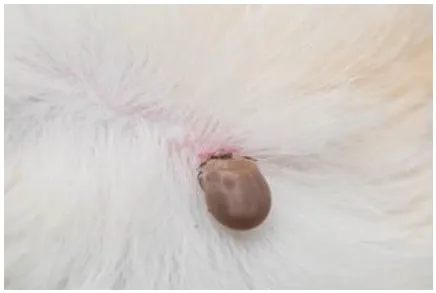
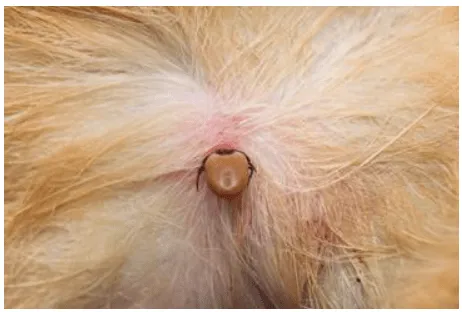
Ticks are small parasites that have eight legs:
- Oval or seed-shaped bodies (about the size of an apple seed)
- Colours ranging from brown and grey to bluish or pink when full of blood
Before feeding, ticks are very small. After attaching and feeding for hours or days, they swell and become much easier to see.
Ticks cannot jump or fly — they crawl onto dogs from grass, plants, or contact with wildlife.
Where ticks commonly hide
Ticks prefer warm, sheltered areas and thick fur. Always check:
- Around and under the tail
- Between the back legs
- Between the toes
- Under the collar and around the neck
- Under the front legs (armpits)
- Around the eyes and ears
- Under the chin
Skin folds and dense fur are their favourite hiding places.
How to check your dog for ticks
Daily checks are the best way to catch ticks before they cause irritation or illness — especially after walks in long grass or woodland.
Step-by-step check:
1. Use your hands first
Slowly run your fingers over your dog's body, feeling for small bumps or lumps. If you find one, part the fur and look closely.
2. Use a flea comb
Comb through thick areas of fur. While it won't remove ticks, it helps expose them.
3. Focus on hidden spots
Pay special attention to ears, armpits, toes, and tail base.
4. Remove any ticks immediately
Use clean tweezers or a tick remover tool.
5. Check bedding and resting areas
Ticks may crawl off after feeding.
If your dog becomes unwell after a tick bite, keep the tick and show it to your vet.
How to remove a tick safely
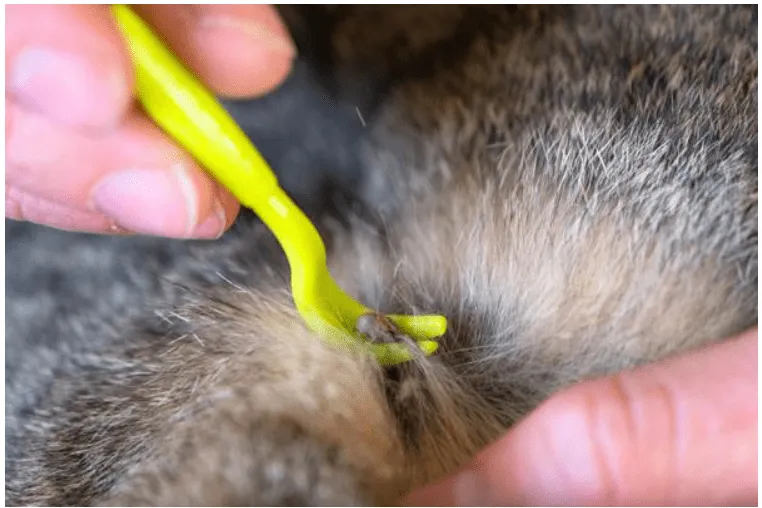
Properly removing ticks reduces the risk of infection.
Safe removal steps:
- Disinfect tweezers or use a tick removal tool
- Grasp the tick as close to the skin as possible
- Pull slowly and steadily straight out (do not twist or crush)
- Clean the area with warm, salty water or vet-approved disinfectant
- Dispose of the tick safely (or keep it if illness develops)
- Monitor your dog for swelling, redness, or unusual behaviour
Do's and don'ts of tick removal
Do:
- Use proper tools
- Pull gently and straight
- Clean the skin after removal
- Stay calm and keep your dog relaxed
Don't:
- Squeeze, burn, or crush the tick
- Yank it out quickly
- Ignore bumps without checking
- Panic — ticks are common and manageable
Common tick questions
Final takeaway
Ticks are common but manageable when caught early. Making tick checks part of your daily routine — especially after outdoor walks — is one of the simplest ways to protect your dog's health.
By knowing where ticks hide, how to spot them, and how to remove them safely, you can prevent discomfort, infection, and tick-borne diseases.
If you're ever unsure or notice signs of illness after a bite, your vet can provide guidance and treatment.